7 Jul 2026
Adaptive Sound Design Protocols Altering Decision Patterns During Remote Multi-Table Poker Sessions via Synchronized Audio Cues
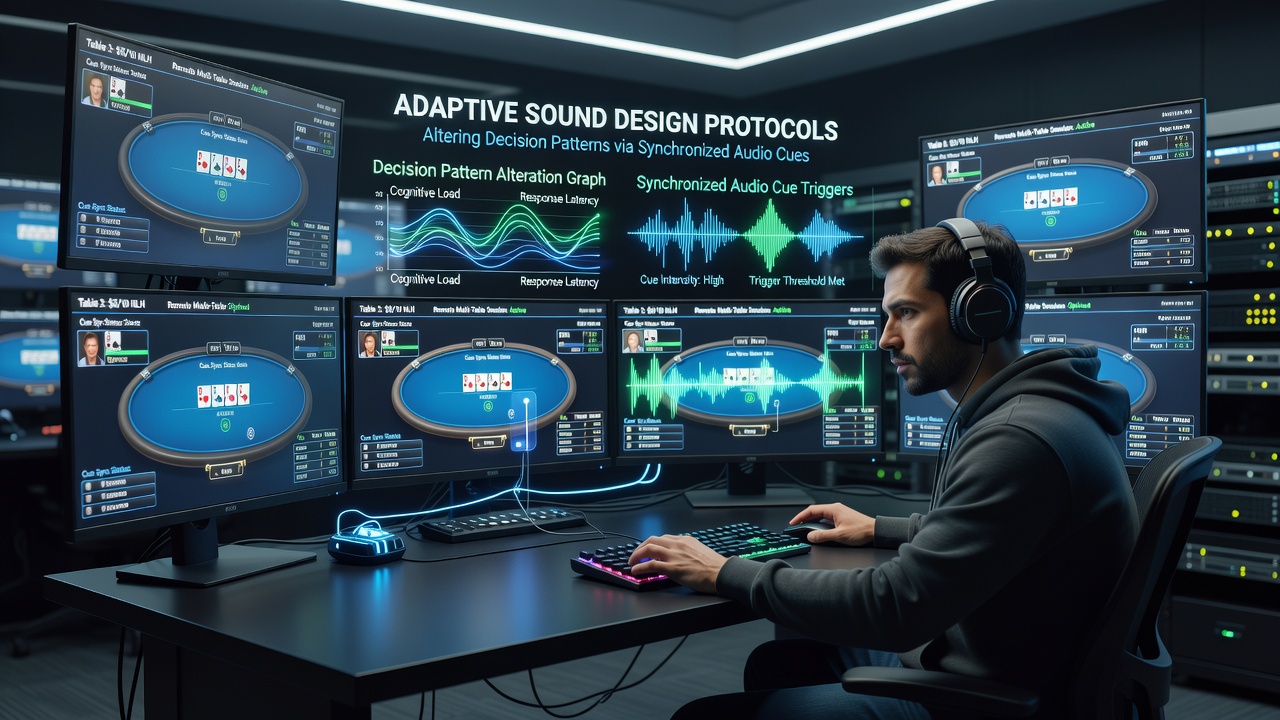
Remote multi-table poker sessions have incorporated adaptive sound design protocols that deliver synchronized audio cues to influence timing and choice sequences, and these systems coordinate with player inputs across distributed platforms. Data from platform analytics in July 2026 indicated that operators began testing layered audio layers that respond to real-time hand volumes and stack positions, creating feedback loops that align with decision windows.
Core Mechanics of Synchronized Audio Integration
Protocols operate through cloud-based audio engines that monitor table states and generate cues matched to betting rounds, and these cues include tonal shifts or rhythmic pulses delivered via player headsets or device speakers. Synchronization occurs at millisecond intervals so that audio events coincide with card reveals or opponent action timers, while the system adjusts volume envelopes based on the number of active tables each participant manages.
Engineers configure cue libraries according to session metrics such as average decision latency and fold frequencies, then the adaptive layer modifies intensity or pitch when patterns deviate from baseline data collected during prior sessions. Observers note that this adjustment happens without interrupting visual feeds, allowing players to maintain focus on multiple interfaces simultaneously.
Observed Shifts in Decision Sequences
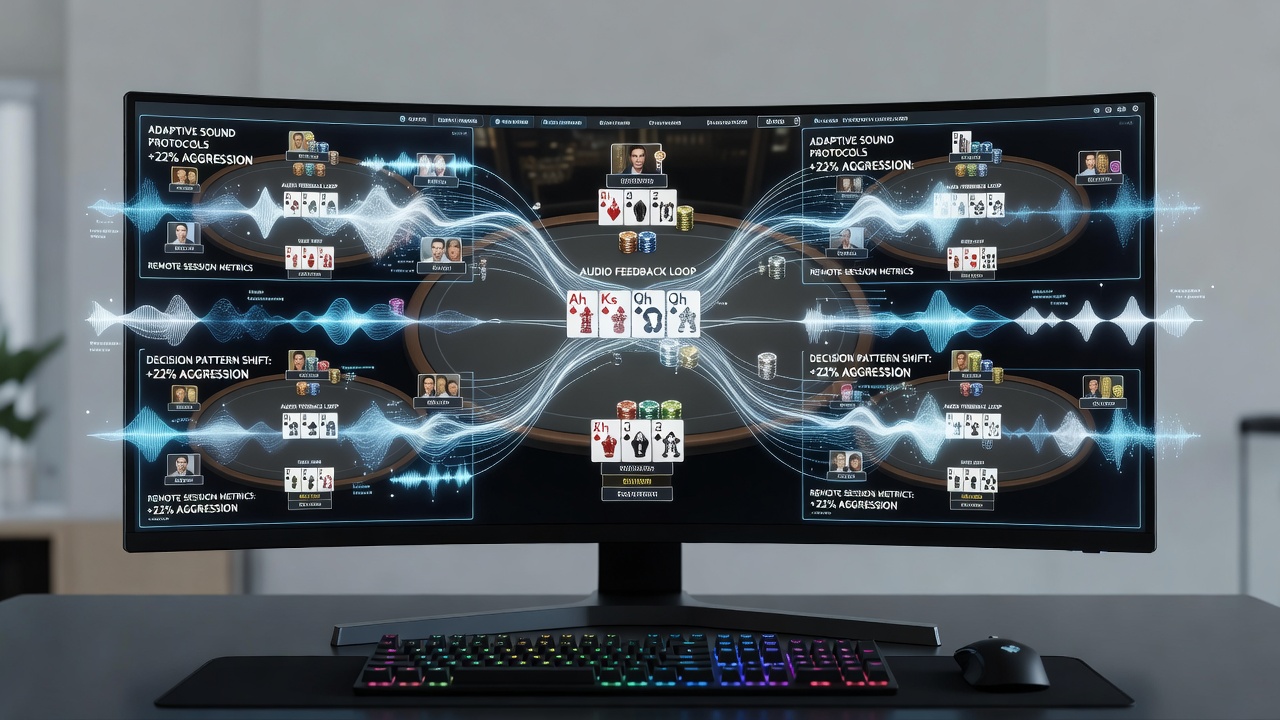
Platform logs compiled through mid-2026 revealed measurable changes in action distributions after audio cue deployment, and participants showed altered rates of continuation bets and check-raises when specific frequency bands activated during turn and river streets. Studies conducted by research teams at the University of Nevada tracked cohorts across 12-week periods and recorded consistent reductions in snap-fold behaviors once synchronized pulses began reinforcing remaining decision time.
One analysis of over 2.4 million hands demonstrated that audio-timed prompts correlated with extended deliberation intervals on marginal holdings, whereas neutral audio conditions produced quicker releases. The patterns appeared across both cash game and tournament formats, suggesting the protocols exert influence independent of prize structures.
Technical Infrastructure Supporting Multi-Table Delivery
Distributed networks route audio packets alongside game-state data through edge servers positioned near regional player clusters, and this architecture minimizes latency that could otherwise desynchronize cues from visual events. Software development kits provided by major poker networks allow operators to embed protocol hooks that read API outputs and trigger corresponding audio events without requiring client-side modifications beyond standard audio permissions.
Security layers encrypt cue metadata so that third-party observers cannot reverse-engineer the mapping between game events and audio signatures, while compliance teams at various gaming control boards review these mappings during periodic audits. In July 2026, several operators reported successful integration with existing responsible gaming tools that monitor session duration and spending thresholds.
Regional Adoption Patterns and Regulatory Context
European and North American platforms adopted the protocols at different rates, and Canadian provincial regulators examined early implementations through the Alcohol and Gaming Commission of Ontario before wider rollout. Australian operators referenced similar frameworks during consultations with state authorities, focusing on transparency requirements around cue algorithms.
Industry reports from the American Gaming Association documented that 18 licensed remote poker rooms had activated some form of adaptive audio by the end of the second quarter of 2026. Figures released by the association showed average table counts per player rising from 4.2 to 5.8 after cue introduction, accompanied by stable complaint volumes regarding game fairness.
Player Interface Adjustments and Training Modules
Interface designers added optional calibration screens that let participants preview cue sets before committing to full sessions, and these screens present sample hands with corresponding audio so users can map sounds to expected decision points. Training modules distributed by platform support teams explain how cue timing aligns with standard clock structures, reducing initial confusion during the first few multi-table experiences.
Support documentation indicates that players who completed calibration sessions exhibited faster adaptation to the new audio layer, and aggregate data from those sessions showed tighter clustering around optimal decision windows compared with uncalibrated cohorts.
Conclusion
Adaptive sound design protocols continue to evolve alongside advances in low-latency networking and audio rendering, and July 2026 marked an inflection point where multiple operators scaled synchronized cue systems across larger player bases. Platform metrics and regulatory filings together illustrate how audio layers integrate into existing multi-table environments, producing measurable adjustments in action timing and sequence selection. Continued monitoring by academic groups and control boards will track long-term patterns as the technology matures across global markets.