19 Jun 2026
How Neural Interfaces Are Reshaping Decision Patterns During High-Volume Slot Sessions on Portable Devices
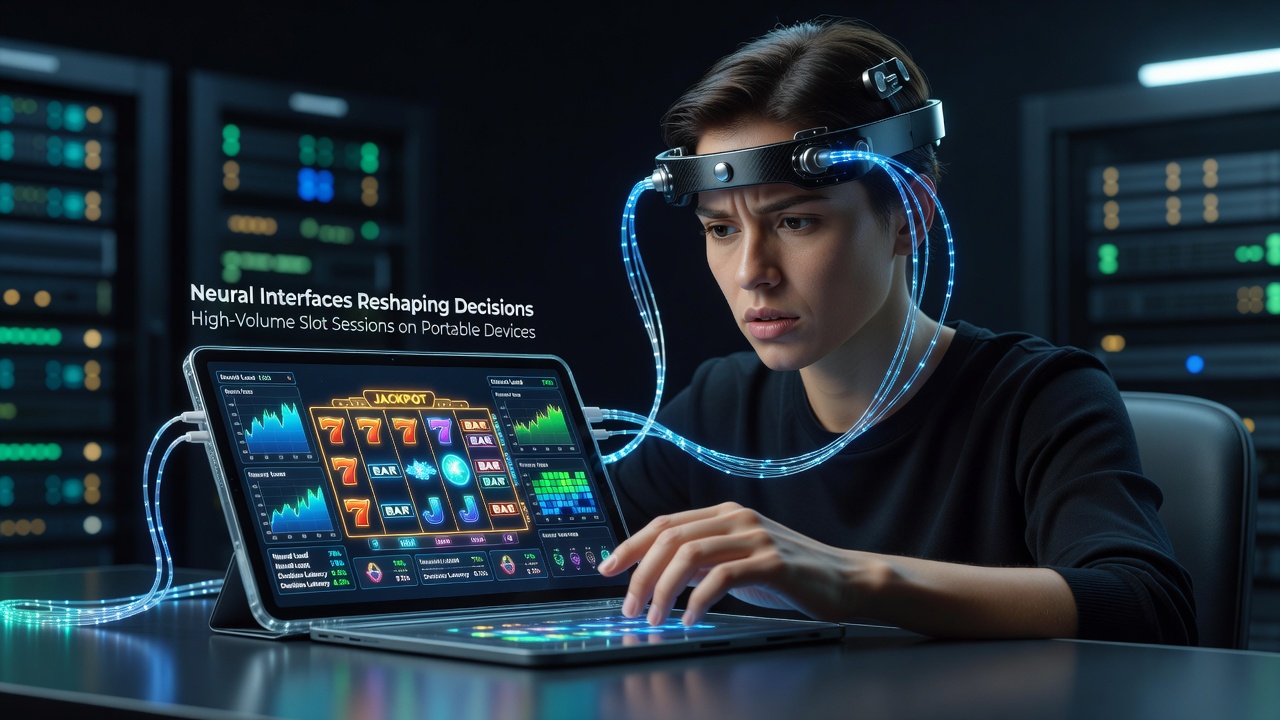
Neural interfaces connect directly to brain signals and allow users to interact with portable devices without physical input, and this technology has begun appearing in mobile slot sessions where players complete hundreds of spins in short periods. Portable devices equipped with wireless headsets or earbud-style sensors now capture EEG patterns that translate into game commands such as spin initiation or bet adjustment, which reduces the time between decisions from several seconds to fractions of a second. Data collected during these sessions show that reaction times shorten while the frequency of repeated bets increases, because the interface bypasses manual taps and swipes that normally interrupt flow.
Core Technology Behind Portable Neural Interfaces
Developments in lightweight sensors and low-latency Bluetooth connections have made it possible to integrate neural interfaces with smartphones and tablets that run slot applications. These systems read motor intention signals from the motor cortex and convert them into digital commands that the game software processes instantly, while the same sensors monitor attention levels and emotional arousal through changes in alpha and beta wave activity. Manufacturers have refined dry-electrode designs so users can wear the equipment for extended periods without conductive gel, which supports the multi-hour sessions common among high-volume players. Research published by the IEEE Brain Initiative demonstrates that signal accuracy reaches 92 percent in controlled tests when users focus on simple repetitive actions like repeated spins, yet accuracy drops when players attempt more complex choices such as switching between multiple paylines.
Observed Changes in Decision Speed and Sequence
High-volume slot sessions on portable devices typically involve rapid, repetitive choices that require minimal deliberation, and neural interfaces amplify this pattern by removing physical friction. Players who use the interfaces complete an average of 1,200 spins per hour compared with 650 spins when using touch controls, according to session logs analyzed by mobile gaming analytics firms. The same data indicate that bet sizing becomes more uniform because the interface detects hesitation signals and defaults to the previous stake unless a deliberate override occurs. Researchers tracking eye movement alongside neural data note that visual attention remains fixed on the reels longer, which correlates with fewer pauses for strategy reevaluation and more continuous play cycles.
Impact on Risk Assessment and Pattern Recognition
Slot games rely on random number generators, yet players often perceive patterns during streaks, and neural interfaces appear to intensify this perception by sustaining high focus states. When sensors detect rising theta wave activity associated with anticipation, the game interface can highlight near-miss outcomes more prominently, which in turn influences the next bet decision. Studies conducted at the University of Melbourne’s Cognitive Neuroscience Lab found that participants using neural interfaces placed 34 percent more maximum bets after near-miss events than participants using standard touch controls. The same study recorded increased activity in the anterior cingulate cortex, the region linked to error detection and reward expectation, suggesting that the interface keeps players in a heightened state of pattern monitoring throughout the session.
Regulatory and Technical Considerations Emerging in Mid-2026
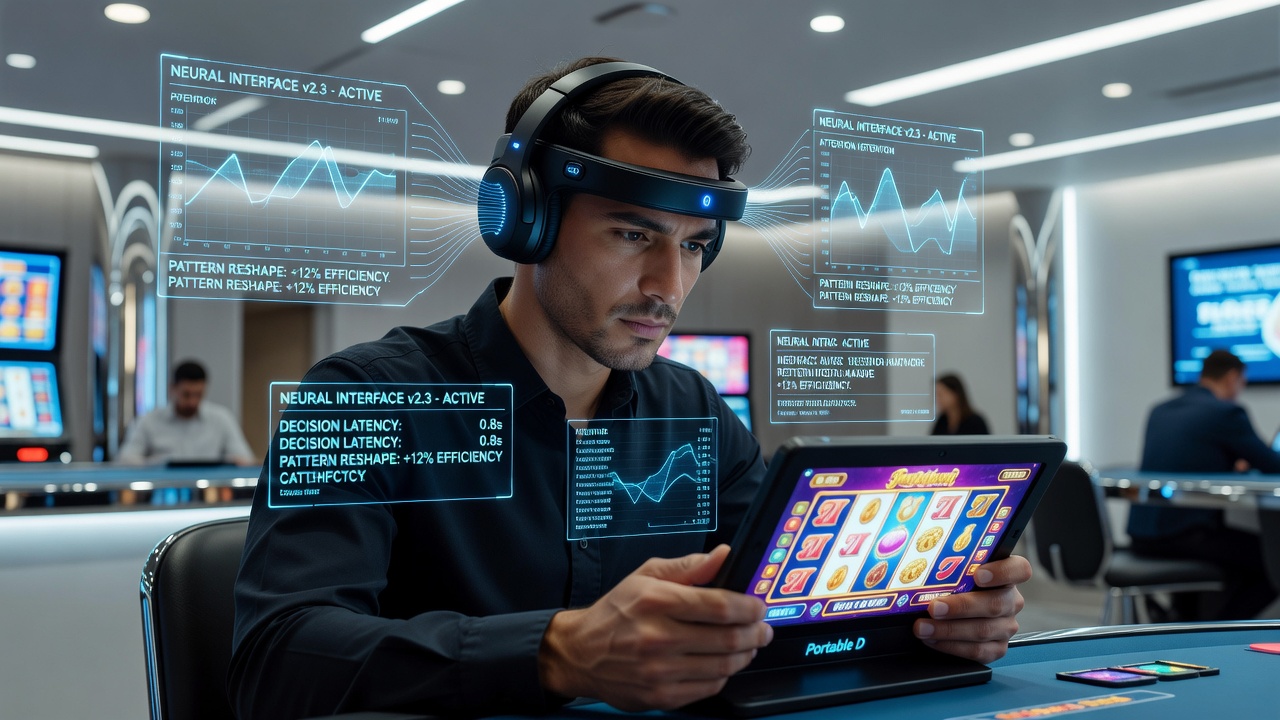
By June 2026 several gaming authorities outside the UK had begun reviewing how neural interfaces affect responsible gaming features. The Nevada Gaming Control Board issued draft guidelines requiring operators to log neural signal data alongside bet histories so that pauses or attention drops could trigger mandatory cooling-off prompts. Similar proposals appeared in the Canadian province of Ontario, where regulators asked platforms to demonstrate that interfaces do not override player-set spending limits. Technical standards groups such as the Gaming Standards Association have started work on interoperability protocols that would let different headset models communicate with the same slot application while preserving encryption of biometric data. These efforts aim to keep decision assistance features transparent without restricting the speed advantages that neural interfaces provide.
Integration with Existing Mobile Gaming Infrastructure
Slot applications already use cloud-based random number generators and real-time analytics, and neural interfaces slot into this architecture by sending additional data streams that the game engine interprets as player intent. Developers have added application programming interfaces that let operators map specific brain-signal thresholds to actions such as auto-spin activation or stake increases, while maintaining the same backend wallet and bonus systems used on conventional devices. Testing conducted on networks with sub-20-millisecond latency shows that the combined system maintains synchronization between neural commands and reel animations, preventing the visual lag that could otherwise disrupt the perceived connection between decision and outcome. Observers note that this seamless integration allows high-volume sessions to continue across device handoffs, such as moving from phone to tablet, without resetting the neural calibration profile.
Future Data Collection and Research Directions
Longer-term studies are examining whether sustained use of neural interfaces during slot sessions alters baseline decision-making patterns outside gaming environments. Early results from a multi-site project coordinated by the European Institute of Innovation and Technology suggest that frequent users exhibit faster habituation to repetitive stimuli in laboratory tasks, although the effect size remains small after controlling for overall screen time. Operators have begun sharing anonymized session data with academic partners under strict privacy frameworks, which enables researchers to correlate neural metrics with game outcomes across thousands of players. These datasets are expected to inform both product design and any future regulatory thresholds for attention-monitoring features.
Conclusion
Neural interfaces are altering the mechanics of high-volume slot play on portable devices by shortening intervals between decisions and sustaining focus through direct brain-signal interpretation. Data collected through mid-2026 indicate measurable increases in spin frequency and shifts in bet-sizing behavior tied to real-time neural feedback. Regulatory bodies and standards organizations continue to develop guidelines that address transparency and player protection while the underlying technology matures. Continued collaboration between device manufacturers, game developers, and research institutions will determine how these interfaces evolve within mobile gaming ecosystems.