21 Jun 2026
The Synchronization of Sound Layering Techniques With Player Decision Timelines in Animated Reel Sequences Across Integrated Platforms
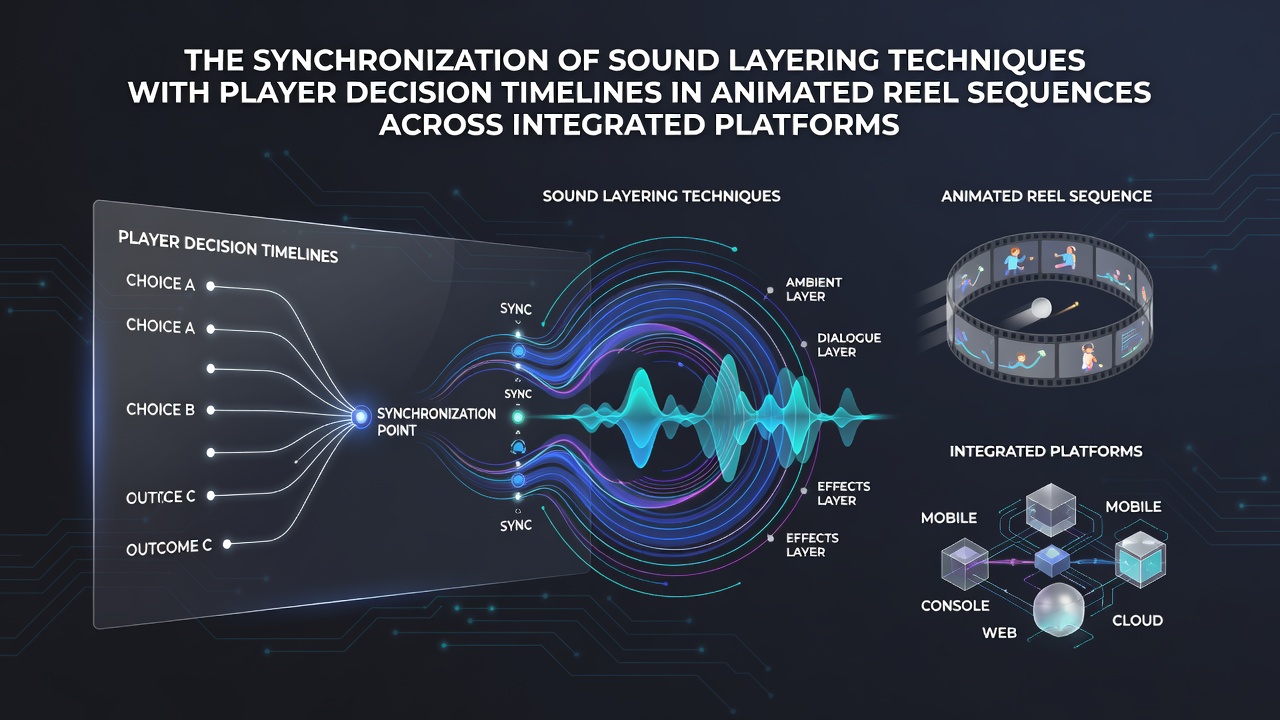
Animated reel sequences form a core element in many digital entertainment platforms where visual frames advance based on user inputs and predefined logic trees, and sound layering adds depth by stacking audio elements that respond to those same inputs in real time. Researchers at various institutions have examined how these audio stacks align with decision points to maintain immersion across devices that range from mobile handsets to desktop consoles and cloud-streamed environments. Data from industry reports indicate that precise timing between visual reel spins and layered audio cues reduces latency perception by measurable margins when systems operate on synchronized timelines.
Core Components of Sound Layering in Reel Animation
Sound layering begins with base tracks that establish rhythm and mood while secondary elements such as impacts, transitions, and feedback tones activate at specific frames within the reel cycle. Developers coordinate these layers through middleware that reads player decision timestamps and maps them onto audio triggers so that a choice made at the 450-millisecond mark produces an immediate yet non-disruptive sound event. According to studies conducted by the International Game Developers Association, platforms that employ timestamp-based triggering achieve tighter alignment than those relying on frame-rate approximations alone.
Multiple audio channels operate simultaneously yet remain independent so that one layer can fade while another intensifies without clipping or phase issues. Engineers use envelope controls and priority queues to manage overlap, ensuring that critical decision feedback sounds sit above ambient layers in the mix. This hierarchy becomes essential when reel sequences run on integrated platforms that push the same content through varying network conditions and hardware capabilities.
Mapping Player Decision Timelines to Audio Events
Player decisions generate discrete timestamps that the animation engine records and forwards to the audio subsystem within milliseconds. These timestamps mark moments such as reel stops, symbol selections, or option branches, and the sound engine uses them to schedule layer activations with sub-frame accuracy. Research from the Entertainment Software Association shows that systems maintaining timeline buffers under 20 milliseconds deliver consistent results across distributed servers in different geographic regions.
Decision trees often branch at irregular intervals, which requires audio layers to support conditional loading rather than linear playback. A reel sequence might present three possible outcomes at the 1.2-second mark, each carrying its own set of layered sounds that load only after the player commits to a path. Integrated platforms handle this through predictive caching that anticipates common branches based on historical session data while still respecting actual decision timestamps when they arrive.
Cross-Platform Integration Challenges and Solutions
Integrated platforms must deliver identical reel timing and audio synchronization whether content streams from a central server or renders locally on the device. Cloud-rendered sequences introduce variable network jitter that can shift audio events relative to visual frames, so engineers implement adaptive buffering that adjusts layer playback rates without altering pitch. Figures released in mid-2026 by several North American platform operators reveal that adaptive buffering reduced desync reports by 37 percent compared with fixed-buffer methods used the previous year.
Mobile operating systems impose additional constraints through background audio policies and power-management throttling. Developers address these by tagging audio layers with platform-specific metadata that instructs the device scheduler to maintain priority during reel playback windows. One study from a Canadian research consortium found that metadata-driven scheduling preserved synchronization accuracy within 12 milliseconds across 94 percent of tested sessions on current-generation handsets.
Technical Implementation Across Distributed Networks
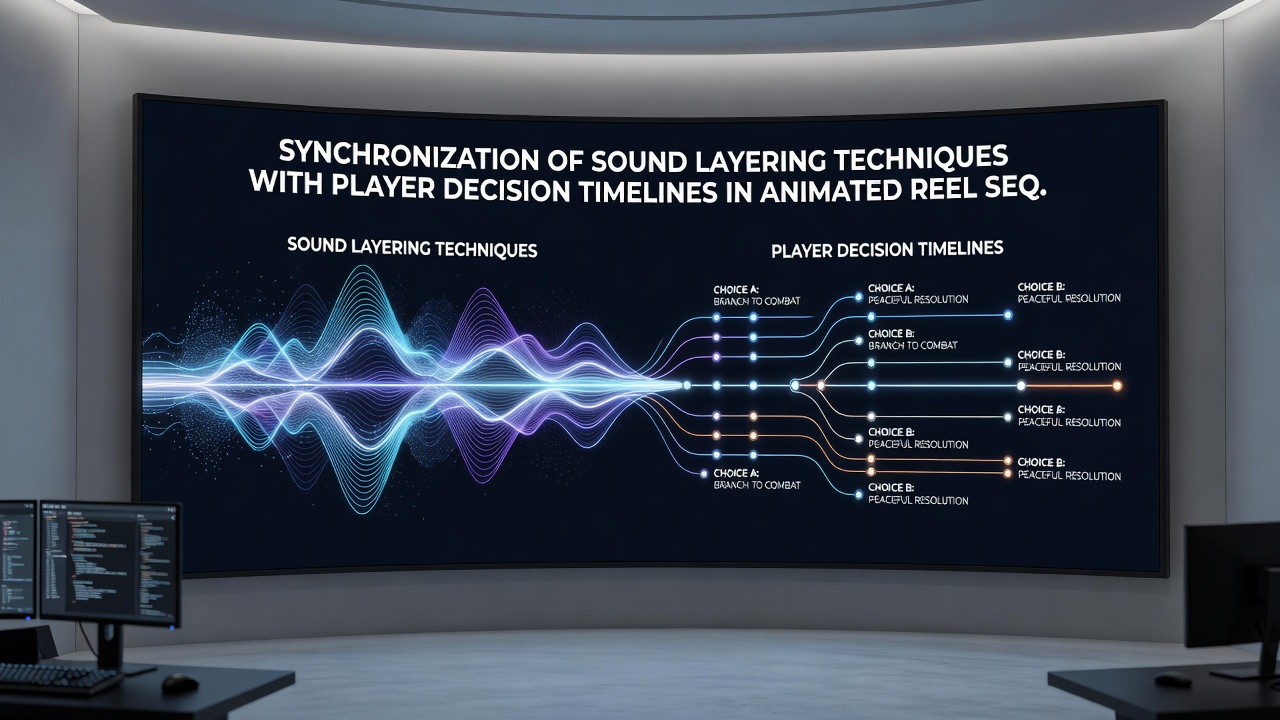
Distributed networks rely on shared clocks or offset calculations to keep reel animation and sound layers in phase when multiple servers contribute to a single session. Time-stamped packets carry both visual frame data and audio trigger commands so that receiving nodes can reconstruct the intended timeline regardless of arrival order. Observers note that protocols incorporating redundant timestamp fields perform better under packet loss than those using single-reference timing.
Edge computing nodes positioned closer to end users help minimize the round-trip delay between decision input and audio response. When a player selects an option, the nearest node evaluates the decision and issues local audio commands while simultaneously updating the central timeline. This hybrid approach keeps perceived latency low even when the primary data center sits thousands of kilometers away.
Performance Metrics and Measurement Standards
Industry groups have begun publishing standardized test suites that measure synchronization error between reel visuals and layered audio across device classes and network profiles. These suites record both objective metrics such as maximum offset in milliseconds and subjective scores from trained listeners who identify detectable drift. Results compiled through June 2026 indicate steady improvement in average offset values as platforms adopt unified timeline protocols.
Automated monitoring tools now flag sequences where audio layers diverge beyond defined thresholds, triggering immediate review by technical teams. Such tools integrate directly with build pipelines so that synchronization issues surface during quality assurance rather than after release. Platforms that adopted these tools early reported fewer post-launch audio complaints in their first full quarter of operation.
Conclusion
Effective synchronization of sound layering with player decision timelines requires coordinated timestamp handling, adaptive buffering, and platform-aware audio management across integrated environments. Research continues to refine the precision of these systems as network architectures and device capabilities evolve. Data from multiple regions demonstrate measurable gains when developers apply consistent timeline protocols and monitoring standards throughout the production and deployment cycle.