7 Jun 2026
Tracing Interconnected Data Flows That Link Player Preferences in Distributed Table Environments to Adaptive Reward Allocations Across Mobile Networks
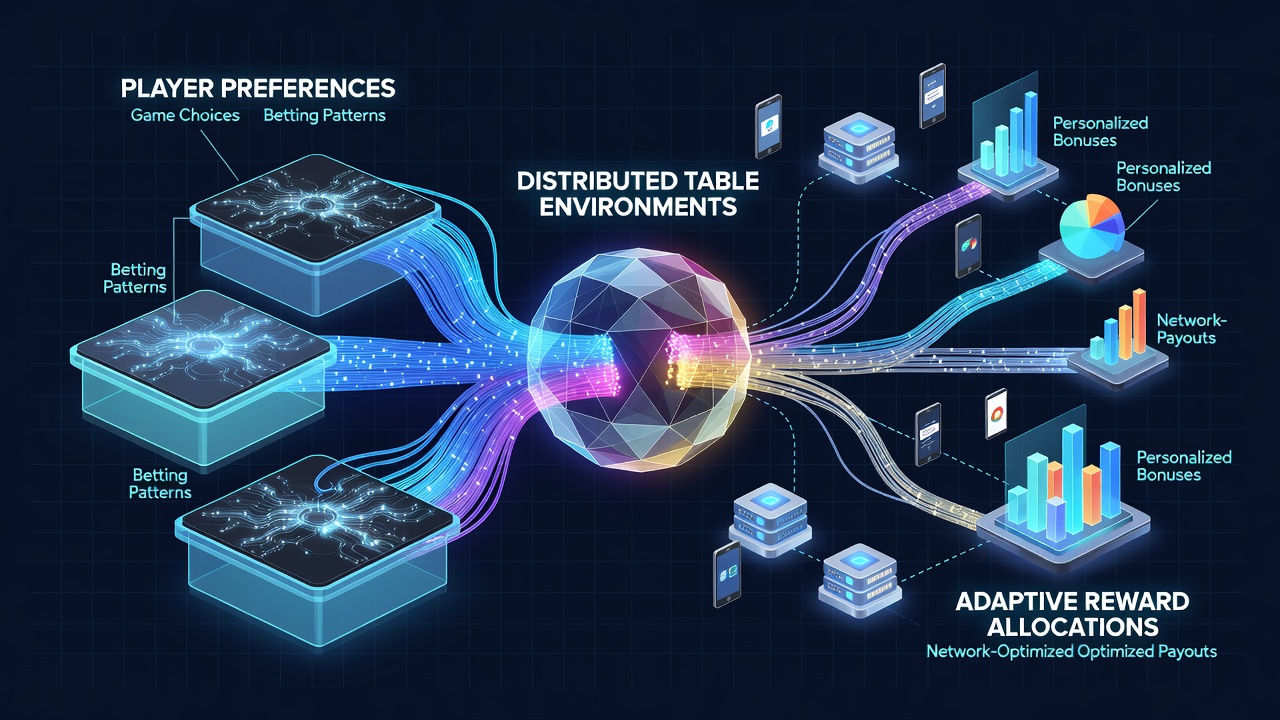
Operators in distributed table environments collect streams of player interaction data from poker tables, roulette wheels and blackjack sessions that run across multiple servers and geographic regions, then route those signals through mobile networks to adjust reward structures in real time. The process begins when a player places a bet or changes seating position, because each action generates packets that travel from the table server to central analytics engines.
Mapping the Core Data Pathways
Distributed table platforms operate on cloud clusters that synchronize game states every few milliseconds, and those clusters forward preference indicators such as average bet size, session length and game selection directly into mobile backend systems. Mobile carriers supply the final hop that delivers personalized offers to devices, while edge nodes positioned near cell towers reduce latency so reward updates appear within the same hand or spin. Researchers at institutions studying network gaming have documented how these handoffs rely on standardized APIs that tag each data packet with player identifiers and preference scores.
According to reports from the Nevada Gaming Control Board, operators processed more than 4.2 billion table-game transactions across distributed networks in the first half of 2026, with roughly 68 percent of those transactions triggering at least one reward recalculation on a mobile wallet. The same datasets also feed loyalty engines that recalibrate free-play amounts, deposit matches and cashback percentages based on observed behavior patterns.
Player Preference Signals in Distributed Tables
Preference signals emerge from several layers: the initial choice of table stakes, the frequency of side bets, and the decision to switch games mid-session. Each choice registers as a timestamped event that distributed ledgers store alongside device metadata. When a player consistently favors high-volatility tables, the system assigns a volatility score that later influences reward density on their mobile profile. Observers note that these scores update continuously because new events overwrite older baselines within rolling 24-hour windows.
One study from the University of Nevada, Reno tracked 12,000 accounts over six months and found that preference drift occurs in 41 percent of active players within any given week, prompting reward systems to reallocate promotional credits to maintain engagement. The study also showed that players who receive recalibrated offers within 90 seconds of a preference shift exhibit longer session times than those who receive static rewards.
Adaptive Reward Mechanisms Across Mobile Networks
Adaptive reward allocation pulls the processed preference data through mobile network gateways that apply location, time-of-day and device-type filters before final delivery. A player who moves from a home Wi-Fi connection to a 5G tower may receive a different reward tier because the system detects higher engagement probability on cellular data. Carriers and operators exchange anonymized aggregates under data-sharing agreements that specify latency thresholds and packet-loss tolerances to keep reward delivery consistent.

June 2026 figures released by the Australian Communications and Media Authority indicate that mobile-initiated reward redemptions increased 23 percent year-over-year, coinciding with wider deployment of network slicing that isolates gaming traffic from general consumer data. Network slicing allows operators to guarantee bandwidth for reward-related packets, which in turn supports the real-time matching of table preferences to mobile offers.
Integration Challenges and Technical Standards
Interoperability between table platforms and mobile carriers requires adherence to protocols such as OpenAPI specifications and JSON schema validation so preference tokens remain intact during transit. When a packet arrives at a mobile edge server, the system checks integrity flags and applies encryption before forwarding the reward instruction to the player app. Failures in any hop trigger fallback logic that substitutes default reward values until the primary pathway recovers.
Industry groups including the European Gaming and Betting Association have published guidelines that recommend minimum encryption standards and audit logs for every data exchange between distributed tables and mobile reward engines. Compliance audits conducted in early 2026 revealed that 87 percent of large operators had implemented the recommended logging practices, which allow regulators to trace reward adjustments back to specific table events.
Future Directions in Data Flow Optimization
Continued expansion of 5G standalone cores and the introduction of 6G testbeds in several markets are expected to shorten the interval between table event capture and reward delivery even further. Pilot programs already demonstrate sub-50-millisecond round-trip times for preference-to-reward cycles when edge computing nodes sit within 10 kilometers of the player device. Those who have examined the logs from these pilots report that reward uptake rates rise when latency drops below the 100-millisecond threshold.
Conclusion
The chain that connects distributed table preferences to adaptive mobile rewards rests on synchronized data pipelines, standardized APIs and low-latency mobile infrastructure. As operators refine these pipelines through 2026 and beyond, the volume of traceable events will continue to grow while the time between a table action and a delivered reward shrinks. Regulatory bodies and industry consortia maintain oversight through logging requirements and performance benchmarks that keep the system transparent and measurable.